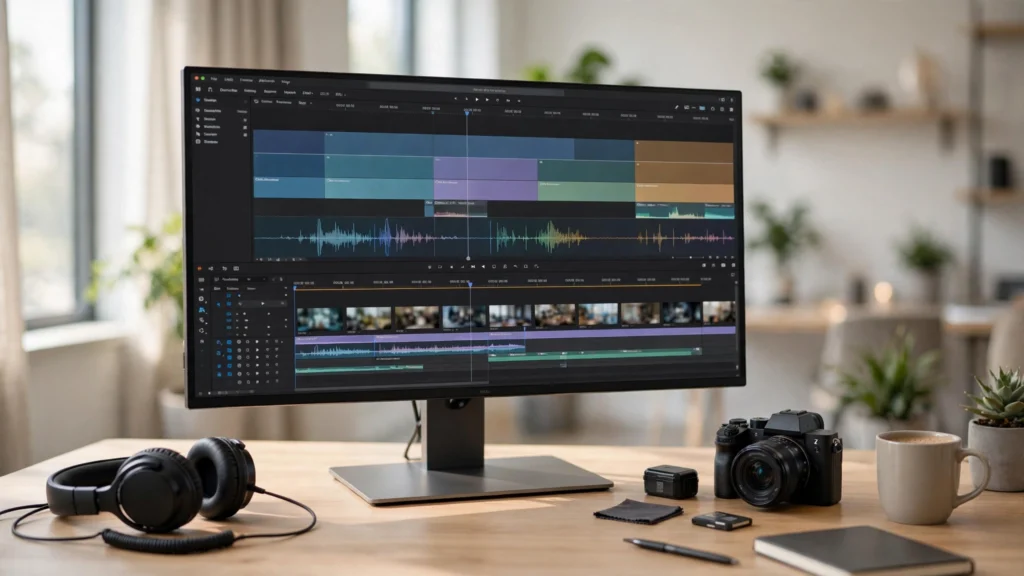
If your business runs on video — social posts, YouTube content, ads, product demos — you’ve probably wondered whether it’s time to hire professional video editing services instead of doing it all yourself. It’s a fair question: editing is one of the most time-consuming parts of content creation, and the difference between a rough cut and a polished final product is often the difference between content that converts and content that’s ignored. This guide walks through what’s actually included in professional video editing services, how to tell when outsourcing makes sense, and what to check before you hire someone with your footage.
What Do Video Editing Services Actually Include?
“Video editing” covers a lot more than trimming the awkward pauses out of your recordings. A professional service typically handles the full post-production package:
Cutting and sequencing. The core work — selecting the best takes, arranging them in a logical flow, cutting dead air, and pacing the video so viewers stay engaged. Pacing alone is a genuine skill: the same footage can feel snappy or sluggish depending on how it’s cut.
Color correction and grading. Making sure shots from different cameras and lighting conditions look consistent, then giving the video a polished, professional look. This is one of the most visible differences between amateur and professional edits.
Audio cleanup and mixing. Removing background noise, leveling volume between speakers, and balancing voice, music, and sound effects. Viewers will forgive shaky visuals far more readily than they’ll forgive bad audio.
Captions and subtitles. A huge share of social video is watched with the sound off, and captions dramatically improve comprehension and retention. Professional services provide properly timed, styled captions — not the auto-generated gibberish your phone produces.
Motion graphics and text overlays. Lower thirds (name and title graphics), animated titles, call-to-action screens, and branded intros and outros. These details are what make a video feel like it came from a real brand.
Thumbnails and multi-format exports. YouTube thumbnails designed to get clicked, plus exports in the right formats and aspect ratios for each platform — 16:9 for YouTube, 9:16 for Shorts, Reels, and TikTok, square for feeds. One shoot, many deliverables.
Not every project needs all of this. A weekly talking-head YouTube video needs clean cuts, audio polish, captions, and a thumbnail. A brand commercial needs the full treatment. Part of a good service’s job is telling you which of these your video actually needs — not selling you the maximum package every time.
Signs Your Business Is Ready to Outsource Video Editing
There’s no revenue threshold or follower count that triggers the right moment to outsource. The signals are practical:
Editing is the bottleneck in your content schedule. You have footage sitting on a hard drive because the edit never gets finished. If the camera work is done but nothing ships, editing is costing you visibility.
You’re spending hours on work you don’t enjoy and aren’t great at. A business owner editing their own videos often spends 5–10 hours per finished video. That’s time not spent on sales, customers, or strategy — usually the higher-value work.
Your content cadence can’t grow. You want to publish three times a week but can only manage one, because editing is the limiting factor. A service lets you scale output without hiring a full-time editor.
Quality is holding your brand back. If your product is premium but your videos look homemade, there’s a credibility gap. Polished video signals that you take your business seriously — customers notice, even subconsciously.
You’re entering a new format. Short-form video, ads, or a YouTube channel each have their own editing conventions. Hiring someone who already knows the format saves months of learning curve.
7 Things to Check Before You Hire a Video Editor
Every provider’s website claims fast turnaround, great quality, and happy clients. Cut through the claims with these specific checks.
1. A portfolio in YOUR format. Don’t just watch a showreel — watch complete videos in the format you need. A wedding videographer’s reel tells you nothing about their ability to edit your product demos or your talking-head short-form videos. Look for clean cuts, good pacing, consistent color, and professional text and graphics.
2. Turnaround times, stated in writing. “Fast” means nothing. You want to know: how many working days per video? What’s the rush option? Confirm whether revisions count against the clock — some services promise 48-hour delivery on the first cut, then take a week on revisions.
3. The revision policy. How many revision rounds are included? What counts as a revision versus a new scope? The healthiest setup is structured: review the rough cut for structure first (before graphics, grading, and final audio are done), because changes after polish are expensive to redo. Give feedback with timecodes, and consolidate all notes into one list.
4. Deliverables and formats. Exactly what do you get back? Number of videos, lengths, aspect ratios, captions (burned-in vs. separate files), thumbnail files, and — important — whether you receive the editable project files. Losing your project files means you’re locked into that editor forever.
5. Music licensing. Ask who provides and licenses the music. A service should use properly licensed music and be able to confirm the license covers your platforms. “Royalty-free” music that isn’t properly licensed can get your videos claimed or taken down.
6. Communication and process. How do they receive footage? Who is your point of contact? How do they handle feedback? A transparent process — upload portal or file transfer, a clear review workflow, one consolidated feedback channel — signals professionalism. Vague answers here are a red flag.
7. The pricing model. Most services price in one of three ways: per video, per project, or a monthly retainer for ongoing content. Per-video pricing suits predictable formats (e.g., a weekly edit); retainers suit businesses producing steady volume. Be wary of pricing that seems impossibly low — it’s usually subsidized by minimal revisions, generic templates, or very fast turnaround that sacrifices quality.
Red Flags That Should Make You Walk Away
Promises of views, virality, or engagement. Editing determines whether your content is watchable and on-brand — it does not control whether people watch. Anyone guaranteeing views or virality is selling something editing can’t deliver.
No relevant portfolio. Excuses about NDAs for every project, a portfolio full of work nothing like what you need, or a reel of other people’s footage should end the conversation.
No revision limits defined. “Unlimited revisions” with no structure sounds generous but usually means sloppy process — or a provider who rushes everything because each project has no defined end.
They won’t give you project files. Some services keep project files to lock you in. You paid for the work; the editable files should be available to you.
No questions about your goals. A good editor asks what the video is for, where it’ll be published, and who it’s for. If the first conversation is all about price and turnaround with no questions about the actual video, expect generic results.
What You’ll Need to Provide
Good editing starts with good input. Before you hire, gather: your raw footage (original camera files, not compressed versions), any separately recorded audio with a sync point, your brand assets (logo, fonts, colors), 2–3 reference videos that show the style you want, and a short brief covering the video’s goal, target audience, target length, and the platforms it’s for. Also confirm music licensing expectations upfront. The better your brief, the better your first cut — and the fewer revisions you’ll burn.
Frequently Asked Questions
How long does it take to edit a business video?
It depends on the footage, the finished length, the editing style, and how many revisions you do. A straightforward talking-head video can take a few days; a commercial with motion graphics and multiple rounds of revisions can take weeks. Agree on a timeline before the project starts, and allow time for your own review and approval.
Should I hire a freelancer or a video editing service?
A freelancer is often cheaper and works well for a single style of content you need occasionally. A service or agency is better for consistent volume, multiple formats, backup editors when someone is unavailable, and a managed process. The real question is reliability at scale: one person gets sick; a service doesn’t.
Who owns the finished videos and project files?
You should. Confirm in writing that you receive full rights to the final videos and access to the project files. This protects you if you ever switch providers.
Do I need a script before hiring an editor?
For scripted content (ads, explainers), yes — editing without a script is expensive guesswork. For vlog-style or talking-head content, a bullet-point outline of key messages is usually enough.
Ready to Hand Your Videos to Professionals?
Editing is one of the easiest parts of content creation to outsource — and one of the highest-leverage. Every hour you stop spending in a timeline is an hour you can spend growing the business the videos are supposed to promote. If you’re producing video regularly and the editing bottleneck is real, it’s time.
Our video editing services cover everything from talking-head YouTube videos to short-form content for Reels, Shorts, and TikTok — clean cuts, color, audio, captions, motion graphics, and multi-platform exports, with a clear process and honest turnaround times. And once your videos are published, our YouTube SEO and social media management services can help them actually get watched. Get a custom quote or contact us to talk about your content — and don’t forget, every video also needs a brand behind it, starting with a solid logo and brand identity.
Related reading: Logo Design Cost: What Small Businesses Actually Pay in 2026